
Reception of the 1968 Version
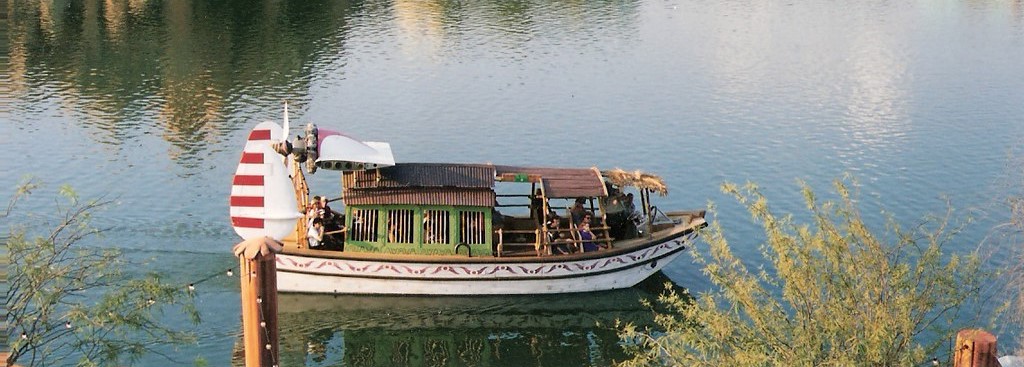
The new version of the ride was overly detailed and extravagant, like entering the pages of a storybook. The words of Ms. Rabbit to “hurry back” were exactly what guests did for years and years to come.
Tales of the Okefenokee was appreciated for more than its peaceful air conditioning and being a dim, secluded place for young couples to get some privacy—it was a nice diversion in the park that children and families fell in love with.
What made it so special was that it was a ride unlike any other in the park and was essentially unmatched in its time. Disneyland was thousands of miles away, and Walt Disney World was years away from opening. Yet, Tales of the Okefenokee managed to leave an impact on many guests of all ages.
Still, Tales of the Okefenokee was somewhat of a hidden gem lost in the thick of The South. It wasn’t necessarily Six Flags’ headlining attraction—it was almost downplayed among the park’s lineup. However, its overemphasized style and whimsy made it a beloved ride within the park.
It was a part of Six Flags Over Georgia’s personality as the ride also had walkaround characters. The ride was even popular enough to have its fair share of sponsorships too.
Beyond being a one-of-a-kind attraction, Tales of the Okefenokee stood out because of its presentation. It was created by a group of puppeteers who knew how to visually tell a story and how to make a positive impression on kids. The colorful sets made a splash, the specially written music was nearly movie quality, and the characters brought a smile to kids’ faces.
The employees who worked at this attraction loved doing so. It was among the more fun venues in the park to work at, and they may have been known for taking a dip in the water after hours to make the most of their time there.
Tales of the Okefenokee was imaginative, creative, and almost unexpected to an extent in a beautifully done way—but that’s not to say the ride was perfect.
Swampy Imperfections
Though it was rich with details to appreciate, it was a pretty simple ride. The animatronics had very basic movements if any at all. But, they were nice animatronics for the time, especially in a regional park. While yes, the ride had an unreal dreaminess to it, it was calamitous in a way that made it feel somewhat homemade.
Tales of the Okefenokee, to its credit, had several elaborate scenes. The ride may seem vast when hearing about all the details nowadays, but the reality was that the scenes were crammed into a relatively small space. With very few barriers between the numerous sets, the whole ride more or less blended together in a confusing way. This caused the sound effects and music to overlap through multiple scenes, causing a dissonant effect and a generally messy mix of noises.
And on top of that, the sound design was inconsistent. Allegedly, the underground rabbit scene on occasion didn’t have any music because the back-of-house employees would shut it off since it could be heard through the walls. They didn’t want to hear sleigh bells throughout their shift, but it took away from the experience for guests.
But most disappointingly, the ride did not hold up well with each passing season. For example, the damp building was not kind to the fur on the animatronics.
To the park’s credit, this was eventually addressed as the animated characters were given new fur and outfits in the mid-‘70s to keep the ride fresh. Be that as it may, their design choices were questionable as the characters then had brightly colored fur and out-of-place costumes. The new look changed the feel of the overall experience, making it a bit tackier than when it first opened.
Tales of the Okefenokee operated for several years with this erratic style. For many riders, this is the condition they saw the ride in—not the wistful look of yesteryear. This may lead some to believe the ride was in complete disrepair toward the end of its lifespan. While the late Tales of the Okefenokee may have been shabby, especially compared to its early years, it was still a popular attraction that was decently maintained.
Actually, the foreman on duty was tasked with riding the attraction once per hour to ensure all the elements were in good working condition. Another employee was stationed near the lift to monitor how well the ride was running at any given time. All this is to say, the ride was being looked after.
Disappointingly, Tales of the Okefenokee was subject to some vandalism. This was a result of the boats not having a restrictive restraint system, so riders could easily hop out of their seats and walk on the sets, even stealing props in some cases. The trough was allegedly widened in some areas to minimize this issue. Employees also were usually quick to notice any wanders and dealt with them before anything happened in most cases. Still, the ride was wearing down to some capacity as the scenes themselves never received any major refurbishments.
Firery Malfunctions
The mechanics of the animatronics were not in the best condition later on, especially as the ‘80s approached. The attraction has even been called a “nightmare” by maintenance crews as the antiquated animatronics started wearing out. As an example, the singing carrots were breaking down one by one. Once a carrot was out of service, it was removed and replaced with shrubbery. This was happening so often that the choir quickly became quite sparse. There also may have been instances of animatronics emitting exhaust, to an extent.
Over time, as more and more details started waning, Tales of the Okefenokee wasn’t being held to a high standard anymore. It wasn’t practical for the park to fix every little issue the ride had; those issues were increasing in number each season. Tales of the Okefenokee was on borrowed time.
By 1980, over a decade after the ride opened, one of the singing carrots badly malfunctioned and caused a fire. Six Flags addressed the affected areas by removing some theming and updating a backdrop—most notably, they removed the singing carrots entirely. The singing watermelons from the end of the ride were relocated to the carrots’ spot at the beginning. The watermelons looked out of place, but that was more or less the condition the entire ride was in at the time. Six Flags made due.
The status of the ride in these later years was a culmination of many issues.
About the Author

You May Also Enjoy…

There’s More to Explore
Check out the video versions of these stories on YouTube.
This article was provided at no cost to you, so any support—even just a follow on social media—helps keep this project running.
Unlock more on the Storybook Amusement Patreon.
Enjoy the ride.
About These Articles
The articles on this website were researched and written by a theme park enthusiast as part of an in-depth YouTube series.
To ensure accuracy, each article is outlined and fact-checked from sources such as newspaper archives, interviews, books, and historical documents. Some sources are not available online but can be referenced upon request.
Content creators who reference information from this website are kindly asked to cite the original source or Storybook Amusement. Thank you.