The Second Gate: ‘Project X’
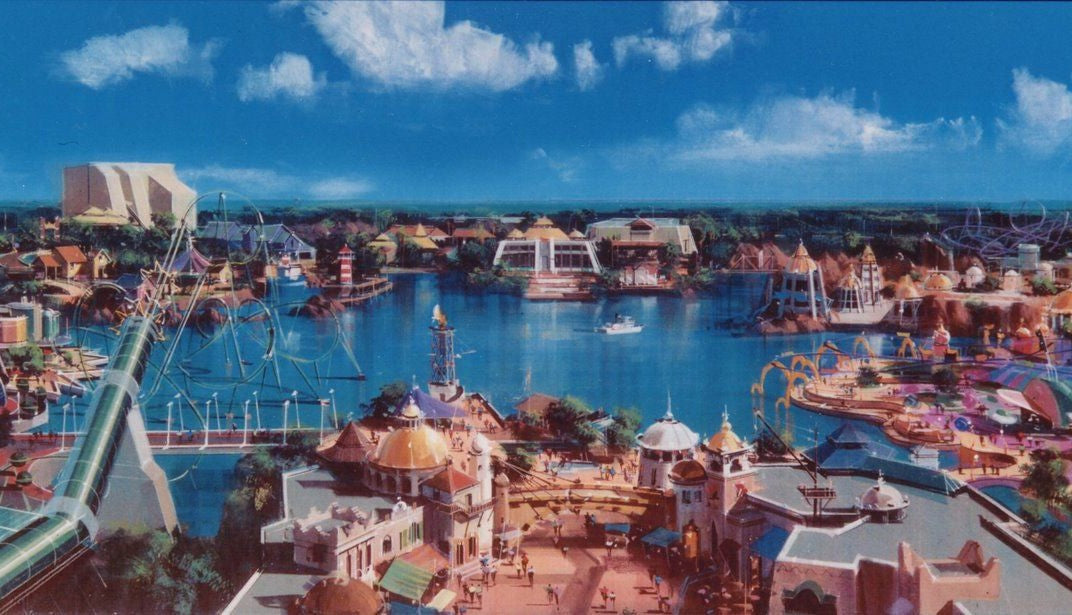
By 1991, Universal executives were workshopping ideas to turn the standalone Florida theme park into a multi-day destination. The expansion was heavily centered around a second gate, known as “Project X,” set to neighbor the existing Universal Studios Florida.
In its early stages, Project X was a new direction for Universal. It wouldn’t be another movie studio theme park, especially considering Universal Studios Florida never fully became “Hollywood East” as intended. Rather, the new theme park in concept would cater to families vacationing in Orlando.
The Universal brand, however, had one problem with this idea; it was missing a roster of family-friendly characters. Properties like Jaws and Back to the Future were great for action rides, but Universal needed new, family-friendly faces; Universal needed partners.
Universal Gets Its Toons
When developing Project X, Universal Florida met with several potential partners about licensing outside characters. Universal in 1991 struck a deal to land the characters of cartoonist Jay Ward and reportedly was in talks with Warner Bros. to license its deep catalog of characters.
Universal also contacted Audrey Geisel, the widow of the author known as Dr. Seuss. Geisel was protective of her late husband’s legacy. As a result, she was originally not interested in Universal’s request to put Dr. Seuss’ work in a theme park. Geisel assumed the result would be carnival quality, but she didn’t realize Universal was going above and beyond.
Universal was not wanting to resort to backup characters. The company was persistent and eventually pitched the idea to Geisel’s literary agent. He was impressed and swayed Geisel to come see for herself. Universal gave Geisel the red carpet treatment, flying her out, hosting a Seuss banquet, and pitching the impressive concepts. After much convincing, she agreed, allowing the use of the whimsical world of Dr. Seuss in Universal’s future theme park.
Project X Becomes Cartoon World
Meanwhile, Universal had been hard at work incorporating the newly acquired characters into an extravagant theme park called Cartoon World. The concept would put guests into a cartoon world—as the name suggests—with many themed areas based on Looney Tunes, DC Comics, Jay Ward, and Dr. Seuss.
The headlining attraction of the Looney Tunes land would be the Coyote Canyon Roller Coaster, based on the explosive escapades of Wile E. Coyote and the Road Runner. Other characters represented in the land would be Bugs Bunny; the Duck Dodgers, featuring Daffy Duck and Marvin the Martian; as well as Sylvester and Tweety.
Another Warner Bros. land would be the DC Comics area, sectioned off into Metropolis and Gotham City. Metropolis’ E-ticket attraction was a state-of-the-art Superman 3D dark ride. Planned for Gotham was a Batman Vs. The Penguin pair of inverted dueling coasters, a Joker wild mouse-style coaster, and a Batman stunt show.
The Jay Ward area, featuring characters like Popeye as well as Rocky and Bullwinkle, had a few planned water rides. One blue-sky concept was for the land’s anchor attraction: a log flume called Dudley Do-Right’s Great Northwest Sawmill. The ride featured an ambitious effect that split the ride vehicle in half before the big drop.
The Dr. Seuss area had a few notable attractions, such as a Cat in the Hat dark ride, an interactive play area called the Noisarium, and a concept for a Grinch junior coaster.
Developing a Full Resort
A brand-new second theme park was only part of Universal Florida’s impending expansion. Universal was planning to overhaul its Florida property, giving guests a reason to extend their visit. On the horizon were additions like on-property hotels, an entertainment complex, and parking structures—nearly doubling the size of the property.
The destination would soon become a full-service resort, tentatively named Universal City Florida.
Universal Florida finally seemed to have a positive future after its opening-day snags. Behind the scenes, however, the negotiations with Warner Bros. unraveled. Universal and Warner Bros. allegedly could not agree on royalties; Warner Bros. reportedly pulled out of the deal in 1993, meaning Universal no longer could use properties such as Looney Tunes and DC Comics.
Thus, Cartoon World was shelved.
Losing Warner Bros. was a massive loss, but Universal Florida was still fixed on expansion. Its second theme park was still on the table—a park more immersive, high-tech, and story-driven than anything before.
About the Author

You May Also Enjoy…
There’s More to Explore
Check out the video versions of these stories on YouTube.
This article was provided at no cost to you, so any support—even just a follow on social media—helps keep this project running.
Unlock more on the Storybook Amusement Patreon.
Enjoy the ride.
About These Articles
The articles on this website were researched and written by a theme park enthusiast as part of an in-depth YouTube series.
To ensure accuracy, each article is outlined and fact-checked from sources such as newspaper archives, interviews, books, and historical documents. Some sources are not available online but can be referenced upon request.
Content creators who reference information from this website are kindly asked to cite the original source or Storybook Amusement. Thank you.