The Delight of EPCOT
Edutainment: The word breaks down to “educational entertainment.” Now, if you took that word—edutainment—and turned it into a theme park, you would get EPCOT.
EPCOT—as you may know—was Walt Disney’s ambitious idea to develop an experimental community.
“EPCOT will take its cue from the new ideas and new technologies that are now emerging from the creative centers of American industry. It will be a community of tomorrow that will never be completed but will always be introducing and testing, and demonstrating new materials and new systems. And EPCOT will always be a showcase to the world of the ingenuity and imagination of American free enterprise.”
– Walt Disney, 1966
The plan was to build an optimized city near Orlando, Florida. However, following Walt Disney’s passing in 1966, EPCOT as originally intended was abandoned. Still, construction for Orlando’s Walt Disney World moved forward, with Magic Kingdom ultimately opening in 1971.
Through the following decade, Disney looked to expand the Florida-based resort with a new theme park. Disney took a different approach with its upcoming theme park. The proposed park would stray from the castle and fantasy influences seen around Disney’s two existing parks at the time, Disneyland Park and Magic Kingdom.
Disney instead took inspiration from Walt Disney’s idea of EPCOT when planning the company’s next theme park: EPCOT Center.
EPCOT Center had a lineup of expressive attractions created to entertain, inspire, and educate. EPCOT Center was a theme park unlike any other in its time, with the passionate and elaborate work of WED Enterprises on full display.
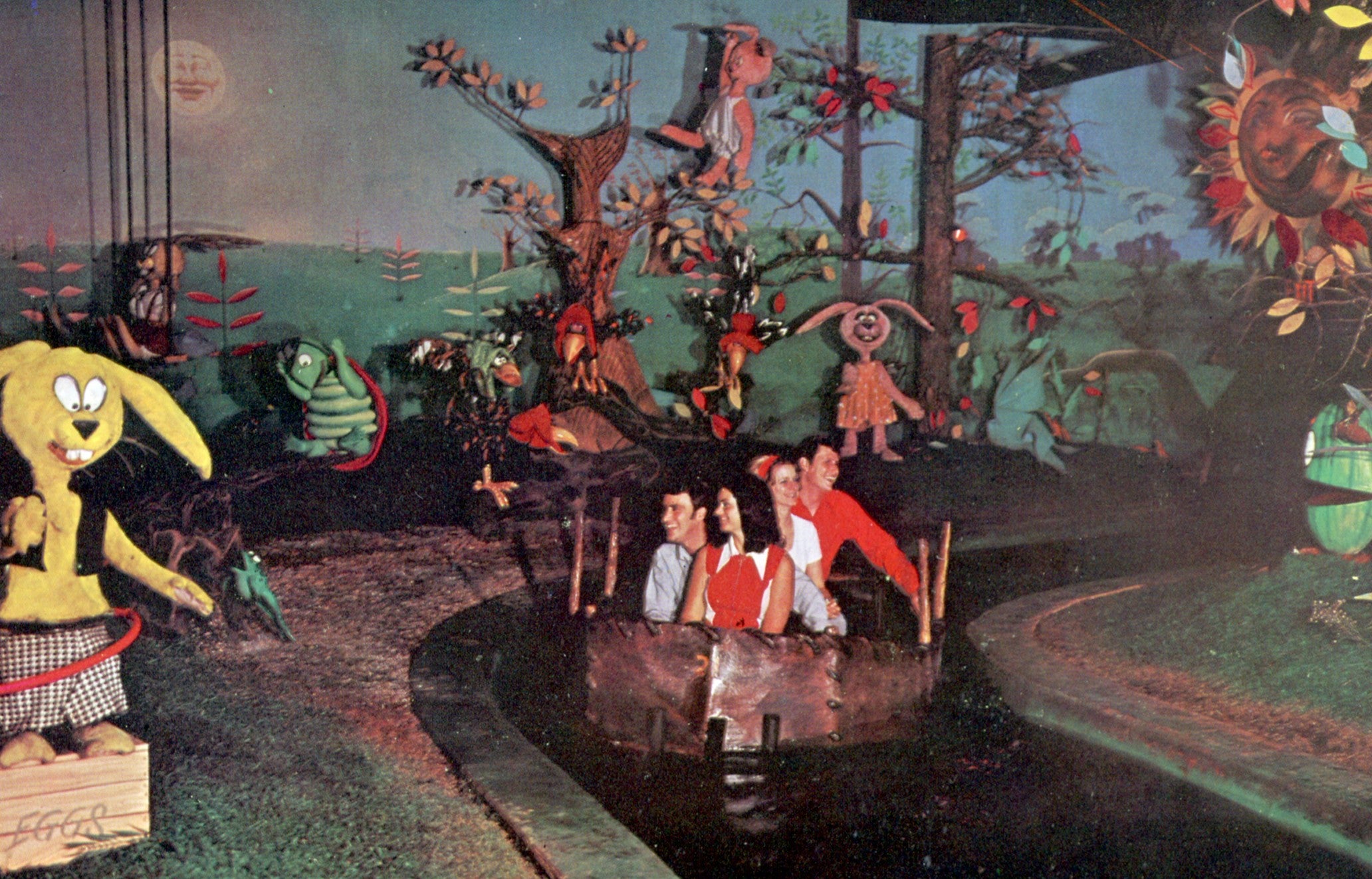
Among animated dark rides and insightful exhibits, another one of EPCOT Center’s opening-day attractions was one of the more offbeat ones ever created by Disney; it was a show made possible by the ingenuity of past Imagineers, eventually made almost unrecognizable, and left to rot in the middle of a massively popular Disney theme park.
This is the story of Kitchen Kabaret and Food Rocks at EPCOT.
Watch on YouTube
This article is available in video form with added visuals and music. Click HERE to watch it.
Creating The Land at EPCOT Center
Through the ‘70s, the plans for EPCOT Center were coming together. The park’s rich variety of attractions and exhibits would be divided between two main areas: World Showcase and Future World.
World Showcase would feature a number of pavilions, presenting countries from around the globe. The pavilions of Future World would focus on the innovations of different subjects, such as energy, transportation, and imagination, among others.
One of Future World’s largest pavilions was the Agriculture Pavilion, set to demonstrate the value of farming and ecosystems. The Agriculture Pavilion would represent different biome environments within elaborate glass structures that resembled beautiful crystals.
Renowned Imagineer Rolly Crump was in charge of creating the pavilion, giving it the imaginative touch Disney was known for. The pavilion originally had a host known as The Landkeeper, who was an original character. Imagineers were also planning a suspended hot-air balloon ride, named Blueprints of Nature, that glided above diverse biome environments.
Enjoying the ride so far?
You may also enjoy the Storybook Amusement series on YouTube.
Get access to ad-free videos, exclusive podcasts, and bonus content by joining the Storybook Amusement Patreon, which helps support future projects like the one you’re reading right now. Thank you!
The Land Gets Sponsored
Developing EPCOT Center was a challenging process. The results, however, would be worth it as Disney anticipated 10 million guests to visit the new park each year. The cost of EPCOT wasn’t cheap, considering its lofty plans and high expectations. Thus, Disney looked for corporate sponsors to co-fund various pavilions. Nine corporations sponsored EPCOT Center’s individual pavilions upon opening, totaling in a collective $300 million across the park.
In 1978, Kraft agreed to sponsor the Agriculture Pavilion, committing to a $35 million deal for 10 years. With this new partnership, Disney had to adjust the plans for the unbuilt pavilion so it reflected the goals of Kraft as a sponsor.
At this point, the pavilion’s name was changed to The Land. The concept, which previously focused on ecosystems, shifted closer to farming and food, with a lean toward nutrition. Consequently, the Landkeeper character and the Blueprints of Nature ride were canceled.
Despite changes, The Land was going to be a robust pavilion, including an experimental greenhouse, and would provide an enriching experience for guests.
“You ask first-graders where their food comes from, and they say the supermarket. I think The Land will change that.”
– Dr. Henry A. Robitaille, director of developmental agricultural systems, Disney, 1982
Now aligning with Kraft as a sponsor, Disney found fitting ways to incorporate its signature whimsy into the pavilion.
About the Author

You May Also Enjoy…

There’s More to Explore
Check out the video versions of these stories on YouTube.
This article was provided at no cost to you, so any support—even just a follow on social media—helps keep this project running.
Unlock more on the Storybook Amusement Patreon.
Enjoy the ride.
About These Articles
The articles on this website were researched and written by a theme park enthusiast as part of an in-depth YouTube series.
To ensure accuracy, each article is outlined and fact-checked from sources such as newspaper archives, interviews, books, and historical documents. Some sources are not available online but can be referenced upon request.
Content creators who reference information from this website are kindly asked to cite the original source or Storybook Amusement. Thank you.